Stem Cells & BMAC in Orthopedics: What Does the Evidence Actually Show?
“Stem cell treatment” has become an umbrella phrase used for very different products and procedures. Some have legitimate orthopedic research behind them. Others are marketed far beyond what the evidence supports. The first step is understanding what is actually being injected — and then asking whether good human studies show that it helps the specific orthopedic problem being treated.
First: “Stem Cells” Is an Umbrella Term
This is one of the biggest sources of confusion. PRP, BMAC, mesenchymal stromal cells, fat-derived products, umbilical products, amniotic products and exosomes are not interchangeable. A clinic that simply says it offers “stem cells” has not yet told you what the treatment actually is.
Orthobiologics / Regenerative Medicine
These are broad terms for biologically derived treatments intended to influence healing, inflammation or tissue repair. The category can include PRP, bone marrow-derived preparations and other biologic products.
Bone Marrow Aspirate Concentrate (BMAC)
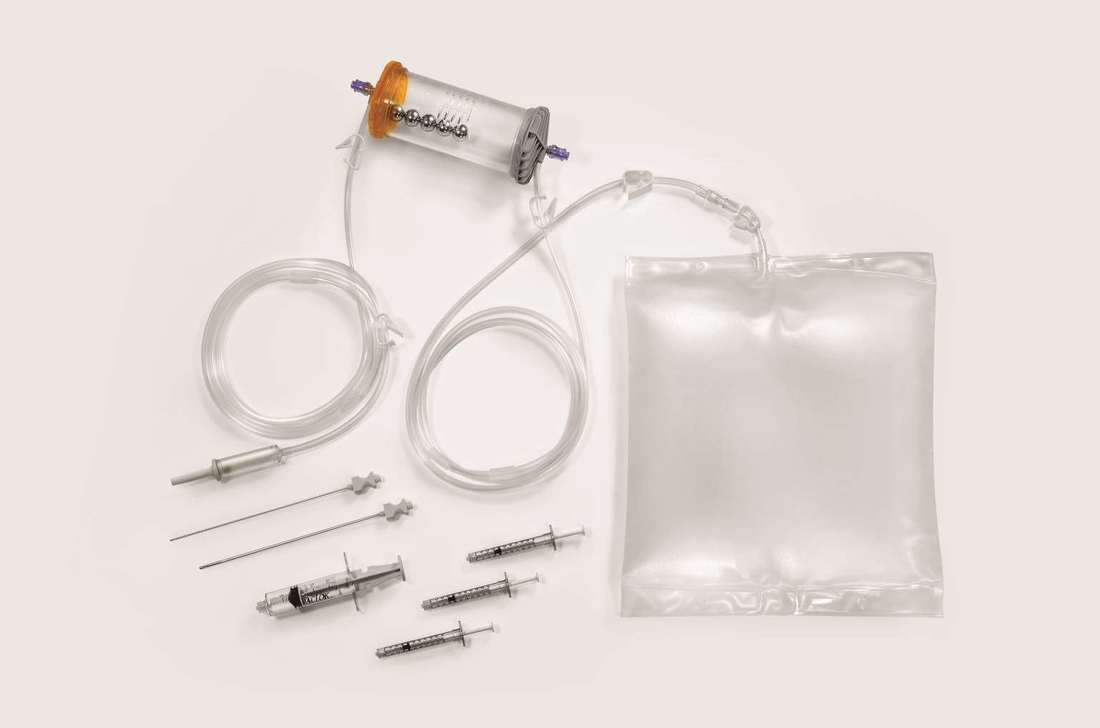
Bone marrow is aspirated from the patient and processed to concentrate nucleated cells and other biologically active components. BMAC contains a mixture that may include mesenchymal stromal cells, hematopoietic progenitor cells, platelets, cytokines and growth factors.
MSCs: Mesenchymal Stromal / Stem Cells
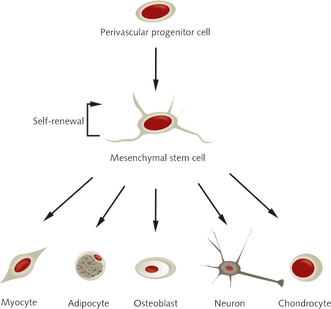
MSC is a term commonly used for multipotent connective-tissue-derived cells found in tissues such as bone marrow and fat. They are different from pluripotent stem cells and are increasingly described as mesenchymal stromal cells because their potential benefit may involve signaling and immune modulation rather than simply transforming into brand-new tissue.
Culture-Expanded Cell Products
Cells can be isolated and grown in a laboratory to greatly increase their number. That is biologically and regulatorily different from a same-day autologous marrow preparation and generally involves substantially more manipulation.
Adipose-Derived Products, MFAT & SVF
Fat contains stromal and progenitor cells, but there are multiple ways to harvest and process adipose tissue. Microfragmented adipose tissue (MFAT) and stromal vascular fraction (SVF) are not the same product and should not simply be labeled “stem cells” without further explanation.
Umbilical Cord, Wharton’s Jelly & Amniotic Products
These products come from donor birth tissues rather than the patient’s own bone marrow. They are fundamentally different from autologous BMAC even when advertising groups them together under the phrase “stem cell therapy.”
Exosomes
Exosomes are tiny extracellular vesicles involved in cell-to-cell signaling. They are not living stem cells. They are sometimes marketed alongside stem cell treatments because signaling molecules are part of the proposed biology.
Platelet-Rich Plasma (PRP)
PRP is prepared from the patient’s blood and concentrates platelets and platelet-derived signaling factors. It does not contain a therapeutic dose of stem cells and should not be described as stem cell therapy.
The key point
If two studies use different cell sources, different processing, different concentrations or different orthopedic diagnoses, they may be studying substantially different treatments. “Stem cell study” is often too vague to tell you whether the research applies to the treatment being offered.
Do Stem Cells Actually Regrow Cartilage?
This is probably the most important expectation to correct. There is currently no good clinical evidence that a routine orthopedic “stem cell injection” reliably recreates a normal joint surface in an arthritic knee, hip or shoulder.
Early enthusiasm focused on the idea that injected stem cells might survive, transform into cartilage cells and directly rebuild damaged tissue. AAOS patient guidance now emphasizes that there is little evidence that injected cells survive long enough to multiply and create healthy new tissue in this straightforward way.
A more realistic theory is that some cell-based preparations may act as biologic signaling environments: releasing factors that alter inflammation, recruit other cells or influence the local healing response. That mechanism could still be clinically useful — but it is different from promising a patient that an injection will “grow back the cartilage.”
Better symptoms do not automatically mean new cartilage.
A patient can have less pain and better function without regenerating a normal joint surface. Likewise, an MRI can show better structural healing without producing a major difference in how a patient feels. Good studies need to measure both.
Where Does the Human Evidence Look Encouraging?
There are orthopedic situations where BMAC and other cell-based strategies have produced encouraging clinical signals. Encouraging does not mean proven for every patient, and the strength of the evidence varies by diagnosis.
Randomized Trial
BMAC improved structural healing on MRI
A 2023 prospective randomized trial evaluated concentrated bone marrow aspirate added to arthroscopic repair of isolated supraspinatus tears. At one-year MRI, evidence of retear was seen in approximately 18% of the BMAC group versus 57% of controls.
2024 Systematic Review
BMAC can improve pain and function — but superiority is uncertain
A 2024 systematic review of randomized trials found that BMAC injections were associated with improvement in pain and function in patients with knee osteoarthritis.
Level I Trial
Adding BMAC did not improve the primary outcome
A 2024 prospective randomized double-blind trial studied patients with symptomatic meniscal tears and mild knee osteoarthritis undergoing arthroscopic partial meniscectomy. Adding autologous BMAC did not significantly improve the primary IKDC outcome or radiographic results at one year.
Wondering whether this evidence applies to your diagnosis?
The first step is identifying the orthopedic problem and comparing BMAC with the other reasonable options — not committing to an injection.
What Does AAOS Say?
The American Academy of Orthopaedic Surgeons describes stem-cell and orthobiologic treatment as an evolving field with significant promise but mixed evidence. AAOS patient guidance states that decades of research have not yet produced strong evidence that stem-cell treatments are broadly effective across orthopedic conditions.
At the same time, AAOS continues to discuss specific areas of emerging evidence. In a 2026 AAOS Now review of rotator cuff orthobiologics, the Academy highlighted promising early BMAC data showing improved tendon integrity and reduced retear rates, while emphasizing that larger randomized trials are still needed to define the indications and long-term benefit.
Biologic activity
BMAC contains cells, platelets, cytokines and growth factors capable of influencing the local healing environment.
Selected applications
Rotator-cuff healing and some knee-osteoarthritis studies provide enough signal to justify continued clinical research and selective consideration.
Universal regeneration
There is no evidence basis for presenting stem cells as a treatment that routinely regrows worn cartilage or works for nearly every musculoskeletal diagnosis.
FDA Status: Why the Exact Product Matters
FDA regulation in this area is complicated, but one point is straightforward: FDA states that regenerative medicine therapies have not been approved for the treatment of orthopedic conditions such as osteoarthritis, tendonitis, knee pain, hip pain or shoulder pain.
The only FDA-approved stem-cell products in the United States are blood-forming hematopoietic progenitor cells derived from umbilical cord blood for specific disorders of the blood-forming system. Those products are not approved as treatments for arthritis, tendon injury or other orthopedic conditions.
“Off-label” and “unapproved” are not the same thing.
The phrase off-label is commonly used when an FDA-approved drug or biologic is prescribed for a different indication. Many products marketed online as orthopedic “stem cells,” however, are not FDA-approved products for some other indication — they may be unapproved regenerative medicine products subject to an entirely different regulatory framework.
Autologous bone-marrow procedures also require more precise language than simply calling everything a “stem cell injection.” Regulatory status can depend on the source of the tissue, how it is processed, how much it is manipulated, and how it is intended to be used. That is one reason we identify the actual procedure — such as BMAC — rather than relying on a broad marketing label.
Can We Use BMAC or a Cell-Based Procedure?
Potentially, in selected circumstances. We do not offer a generic “stem cell package,” and we do not recommend cell-based treatment simply because a patient has arthritis or wants to avoid surgery.
A bone-marrow-derived procedure may be considered when the orthopedic diagnosis, available human evidence, alternatives, patient goals, expected benefit, regulatory framework and cost make it reasonable. Whether it adds enough value depends on the specific situation.
A meniscus tear, focal cartilage defect, generalized arthritis and rotator cuff tear are biologically different problems.
Pain relief, structural healing, delaying surgery and regrowing cartilage are not the same endpoint.
If PRP, physical therapy, medication, a gel injection or another established treatment has equal or better evidence, that matters.
If the evidence is mixed, patients should be told it is mixed before spending money or altering an established treatment plan.
We will not tell a patient that BMAC is guaranteed to grow back cartilage or repair tissue when current human evidence does not support that promise.
Have a specific knee, shoulder, hip or tendon problem?
Tell us what is going on. We can review whether BMAC, PRP, another nonsurgical option, or standard orthopedic care makes the most sense.
How Patients Can Protect Themselves
New biologic treatments can be exciting without being magical. A reasonable clinic should be able to tell you exactly what is being used, why it is being considered for your diagnosis, what evidence supports it, and what is still unknown.
Be cautious when you hear claims such as:
- “This will regrow your cartilage.”
- “Stem cells can prevent your knee replacement.”
- “The cells know exactly where to go and repair the damage.”
- “This works for arthritis, tendon tears, back pain and almost every injury.”
- “It is from your own body, so the FDA does not regulate it.”
- “Umbilical cord” or “amniotic” being presented as though that automatically means live therapeutic stem cells.
- “FDA registered” being used as though it means the product is FDA approved.
- A high-cost package offered before a clear orthopedic diagnosis has been established.
Questions worth asking before any cell-based procedure
What exactly is the product?
Bone marrow aspirate? BMAC? Culture-expanded cells? Fat-derived tissue? Umbilical cord? Wharton’s jelly? Amniotic product? Exosomes? These are not interchangeable.
What human study supports my diagnosis?
Ask for evidence involving the same condition and, ideally, a similar preparation rather than a completely different “stem cell” product.
What result should I realistically expect?
Less pain? Better function? Better MRI healing? Delayed surgery? The expected endpoint should be specific.
What is the FDA status?
Ask whether the exact product is FDA approved for the proposed use, part of an FDA-supervised clinical trial, or being used under another applicable regulatory pathway.
Common Questions About Stem Cells & BMAC in Orthopedics
Are BMAC and stem cells the same thing?
No. BMAC is a concentrated preparation made from a patient’s bone marrow. It contains many components, including a relatively small population of mesenchymal stromal cells. Calling BMAC simply “stem cells” leaves out much of what is actually in the preparation.
Can stem cells regrow knee cartilage?
Routine orthopedic cell injections have not been proven to reliably regrow a normal cartilage surface in an arthritic knee. Some patients may improve symptomatically after cell-based procedures, but symptom improvement should not be interpreted as proof of cartilage regeneration.
Does BMAC work for knee arthritis?
Several studies report improvements in pain and function after BMAC for knee osteoarthritis. However, systematic reviews have not consistently shown a clinically important advantage over other injection options. It may be reasonable in selected patients, but it is not an established superior treatment for every arthritic knee.
Can BMAC help a rotator cuff repair heal?
This is one of the more interesting areas of current research. A prospective randomized trial reported substantially fewer retears on one-year MRI when concentrated bone marrow aspirate was added to rotator cuff repair. The same study did not show a corresponding significant improvement in patient-reported outcomes or overall treatment-failure rates, so the clinical role is still being defined.
Are umbilical cord or amniotic injections the same as my own BMAC?
No. They come from different tissue sources and may be processed and regulated differently. Evidence from an autologous bone-marrow study should not be used to claim that a donor-derived umbilical or amniotic product will produce the same result.
Are exosomes stem cells?
No. Exosomes are extracellular signaling vesicles rather than living stem cells. FDA states that there are currently no FDA-approved exosome products.
Are stem cells FDA approved for arthritis or tendon injuries?
FDA states that regenerative medicine therapies have not been approved for orthopedic conditions such as osteoarthritis, tendonitis, knee pain, hip pain or shoulder pain. This is separate from the question of whether a physician may consider a particular autologous procedure under an applicable regulatory framework.
Does Atlanta Bone & Joint perform BMAC or stem-cell procedures?
We may consider selected autologous bone-marrow-derived procedures on a case-by-case basis when the diagnosis and available evidence make the treatment reasonable. We do not offer a generic stem-cell treatment package, and we do not promise cartilage regeneration or guaranteed avoidance of surgery.
Evidence-Based Care Does Not Mean Ignoring New Treatments
Evidence-based medicine is not the same thing as waiting until every question has been answered. It means matching the strength of the recommendation to the strength of the evidence.
BMAC and cell-based orthobiologics are worth studying. There are enough positive signals to believe that some applications may ultimately earn a meaningful role in orthopedic care. There are also enough negative and mixed studies to reject the idea that “stem cells” should be routinely sold for nearly every painful joint or tendon.
Our approach is to keep reviewing the data, identify the specific applications where the evidence becomes convincing, and change our practice when the science justifies it.
Other Orthopedic Treatment Options We Use Today
Cell-based treatment is only one part of a much larger orthopedic treatment spectrum. Depending on the diagnosis, patients may have simpler or better-studied options available.
Learn About Other Evidence-Based Treatment Options
Sources & Continuing Evidence Review
This page is intended as an educational physician evidence review. Research in orthobiologics continues to evolve, and conclusions may change as larger randomized trials and longer-term studies become available.
American Academy of Orthopaedic Surgeons — Use of Stem Cells in Orthopaedics:
AAOS OrthoInfo: Use of Stem Cells in Orthopaedics
AAOS Now — Orthobiologics and Rotator Cuff Tears, 2026:
Orthobiologics expands treatment for rotator cuff tears
U.S. Food & Drug Administration:
Important Patient and Consumer Information About Regenerative Medicine Therapies
Cole et al., American Journal of Sports Medicine, 2023:
Prospective Randomized Trial of Biologic Augmentation With Bone Marrow Aspirate Concentrate in Arthroscopic Rotator Cuff Repair
Han et al., 2024 — BMAC for Knee Osteoarthritis:
Bone Marrow Aspirate Concentrate Injections for the Treatment of Knee Osteoarthritis: A Systematic Review of Randomized Controlled Trials
Yanke et al., American Journal of Sports Medicine, 2024:
Randomized Trial of Autologous BMAC During Arthroscopic Meniscectomy in Patients With Early Knee Osteoarthritis