Atlanta Bone and Joint Specialists
  • Our Doctors
    • About Us
    • Maurice Jové, M.D.
    • Nathan Jove, M.D. >
      • Español
    • Jeff Traub, M.D.
    • Brandon Tolman, D.O.
    • Physician Assistants >
      • Omid Midanaky, PA-C
      • Aidan O'Connor, MPH, PA-C
      • Elissa Stanton, PA-C
  • Locations
    • Decatur
    • Loganville
    • Snellville
  • Appointments
    • Online Scheduling
    • Citas Ortopédicas (ES)
    • Second Opinion >
      • Elite Athlete Second Opinions
      • Second Opinion
    • Self-Pay MRI
    • Medical Tourism
  • Patient Resources
    • Español >
      • Atención Ortopédica Urgente en Español
      • Radiografías el Mismo Día para Lesiones
      • Inyecciones de Cortisona el Mismo Día
    • Urgent Orthopaedic Care >
      • Urgent Orthopaedic Care
      • Same-Day Sports Injury Care
      • Joint Dislocation Treatment & Reduction
      • Swollen Knee Treatment & Joint Aspiration
      • Same-Day Cortisone Shots and Joint Injections
    • Social Media >
      • Facebook
      • Instagram
      • LinkedIN
      • Twitter
      • YouTube
      • Nathan Jove Social Media >
        • @theorthopedicsurgeon on Instagram
        • @theorthopedicsurgeon on Youtube
    • Billing & Insurance >
      • Payments
      • Cost Estimator
      • Insurance
    • Patient Forms & Requests >
      • Forms
      • Medical Records
      • Prescription Refill Request >
        • Decatur
        • Loganville
    • Bracing
    • Conditions Treated >
      • Arthritis
      • Avascular Necrosis
      • Sports Injuries
    • MRI
    • MRI Review
    • Reviews
    • Affiliate Hospital Resources >
      • Emory Decatur Hospital
      • Atlanta Outpatient Surgery Center
    • Saturday Clinic
    • What To Expect
    • Blog
    • FAQ >
      • Blood Clots After Orthopedic Surgery
      • FAQ
      • Video
      • What is an Orthopedic Doctor
      • Home Therapy
    • Orthopedic Survey Center >
      • Outpatient Total Joint Replacement Survey
      • Painful Knee Replacement Survey
      • Painful Hip Replacement Survey
      • Rotator Cuff Surgery Survey
      • Meniscus Tear Survey
      • Partial Knee Replacement Survey
      • Self-Pay MRI Request Form
      • Elite Athlete Second Opinion Survey
      • Orthopedic Second Opinions & MRI Review | Dr. Nathan Jové
    • Privacy Policy
  • Specialties
    • Joint Replacement Center >
      • Hip >
        • Hip Replacement Second Opinion
        • Anterior Hip Replacement
        • Total Hip Replacement
        • Painful Hip Replacement
      • Knee >
        • Knee Replacement Second Opinion
        • Total Knee Replacement
        • Knee Replacement Surgery Recovery
        • Painful Knee Replacement
        • Anterior Reference Knee Replacement
        • Partial Knee Replacement
        • Patellofemoral Replacement
        • Tourniquet-less Knee Replacement
        • How to Prepare and What to Expect Knee Surgery
      • Shoulder >
        • Shoulder Replacement Second Opinion
        • Total Shoulder Replacement
        • Reverse Total Shoulder Replacement
        • Shoulder Surgery
      • Ankle >
        • Total Ankle Replacement
      • Outpatient Joint Replacement Center
      • Revision Surgery >
        • Revision Knee Replacement
        • Revision Hip Replacement Surgery
        • Metal on Metal Hip Problems
      • Metal Sensitivity and Nickel Allergy
      • Infections >
        • Hip and Knee Replacement Infections
    • Knee >
      • Knee Surgery
      • Knee Arthritis
      • Cartilage Repair & Restoration
      • Meniscus Tears
      • ACL Tears
      • MACI Cartilage Repair
      • Patella (Kneecap) Instability
      • MPFL Tear & Patellar Instability
      • Patella (Kneecap) Dislocation
      • Knee MCL Injuries
      • Knee AVN
      • Quadriceps Tendon Tear
      • Patellar Tendon Tear
    • Shoulder >
      • Shoulder Surgery
      • Rotator Cuff Tears
      • SLAP Tears
      • Labral Tears
      • Shoulder Arthritis
      • Shoulder Dislocation/s
      • Shoulder AVN
    • Hip >
      • Hip Surgery
      • Hip Arthritis
      • Hip AVN
      • Hip Labral Tears
      • Femoroacetabular Impingement
      • Gluteus Medius & Minimus Tears
      • Greater Trochanteric Bursitis
    • Foot and Ankle >
      • Achilles Tendon Tears
      • Ankle Sprains and Recurrent Instability
      • Syndesmosis (High Ankle) Sprain
      • Ankle Arthritis
      • Ankle (Talus) AVN
      • Kohler's Disease- Navicular AVN
      • Tarsal Tunnel Release
    • Elbow, Hand & Wrist >
      • Carpal Tunnel Sydnrome
      • Cubittal Tunnel Syndrome
      • Elbow UCL Injuries
      • Trigger Finger
      • Tennis Elbow (Lateral Epicondylitis)
      • Biceps Tears
    • Robotic Surgery >
      • Robotic Knee Replacement with AI
      • Robotic Hip Replacement with AI
    • Arthroscopic Surgery
    • Regenerative Medicine >
      • Stem Cell Therapy
      • Cartilage Restoration
      • PRP (Platelet-Rich Plasma) Injections
      • Hyaluronic Gel Injections - Atlanta Bone and Joint Specialists
    • Fracture Care >
      • Fracture Care
      • Shoulder >
        • Collarbone (Clavicle) Fracture
        • Proximal Humerus Fractures
      • Upper Arm (Humerus) >
        • Humerus Shaft Fractures
      • Elbow >
        • Radial Head Fractures
        • Olecranon (Elbow) Fractures
      • Forearm >
        • Radius Fractures
        • Ulna Fractures
        • Both Bone Forearm Fractures
      • Hand & Wrist >
        • Broken Wrist/Distal Radius Fracture
        • Metacarpal Fractures
        • Finger Fractures
      • Hip & Femur >
        • Hip Fractures
        • Femoral Shaft Fractures
      • Knee >
        • Patella (Kneecap) Fractures
        • Tibial Plateau Fractures
        • Distal Femur Fractures
      • Tibia (Shinbone) >
        • Tibia & Shinbone Fractures
      • Foot & Ankle >
        • Ankle Fractures
        • Calcaneus Fractures
        • Jones Fractures
      • Fracture Nonunion & Malunion
      • Periprosthetic Fractures
    • EMG
    • Español >
      • Manguito Rotador
      • Reemplazo de Rodilla
      • Reemplazo de Cadera
      • Reemplazo de Hombro
      • Lesiones por Accidentes
      • Dislocación e Inestabilidad del Hombro
      • Desgarro de Menisco
      • Fracturas y Huesos Rotos
      • Dedo en Gatillo
  • Workers Compensation
    • Submit a Referral
    • Injuries We Treat
    • Adjusters & Case Managers
    • Direct Physician Contacts
    • Workers Compensation Overview
    • Care & Documentation
    • Neck & Back Injuries
    • Shoulder & Knee Injuries
    • Compensación Laboral
  • For Professionals
    • Physician Referrals
    • Attorney Referrals
    • Orthopedic Expert Witness
    • Independent Medical Examination
    • Car Accident Orthopedic Care
    • Job Opportunities
Atlanta Knee Replacement Specialists

Total Knee Replacement in Atlanta

Meet a high-volume Atlanta knee replacement team offering same-day outpatient total knee replacement for appropriate patients. We serve Atlanta, Decatur, Snellville, Loganville and surrounding communities with efficient team-based surgery, spinal-first anesthesia, modern pain control and careful buried-stitch closure.

Schedule a Knee Evaluation 404-298-3730 Knee Replacement Second Opinion
High-Volume Atlanta Surgeons Multiple joint replacements performed in a typical surgical day
Home the Same Day Our preferred pathway for medically appropriate patients
Spinal-First Anesthesia Often avoids a traditional full general anesthetic
Buried-Stitch Closure Absorbable sutures beneath the skin, typically without staples
The Decision Is Personal

You Tell Us When Your Knee Pain Has Become Too Much

Our philosophy is simple: we do not tell you that you must have a knee replacement because an X-ray looks severe. We determine what is causing your pain, explain the available treatments and help you decide when the limitations of arthritis outweigh the demands of surgery and recovery.

Some patients with advanced arthritis remain active with injections, therapy, medication and activity modification. Others can no longer walk comfortably, climb stairs, sleep, work or enjoy daily life. The right time for total knee replacement depends on the combination of your symptoms, examination, imaging, health and goals.

  • Pain with walking, standing, stairs or getting out of a chair
  • Night pain, swelling, stiffness or loss of motion
  • A bowlegged or knock-kneed deformity that is progressing
  • Declining independence or inability to perform normal activities
  • Nonsurgical treatment no longer providing meaningful relief
“ You decide when you are ready. Our job is to make sure you understand the diagnosis, the alternatives and the plan.

A knee replacement consultation should be a real discussion—not a rushed decision based only on age or an X-ray report.

Understanding Knee Arthritis

What Does “Bone-on-Bone” Knee Arthritis Mean?

Healthy cartilage creates a smooth, low-friction surface between the thighbone, shinbone and kneecap. As cartilage is lost, the joint becomes rougher, less mobile and increasingly painful. Advanced cartilage loss is often described as “bone-on-bone” arthritis.

OA

Osteoarthritis

The most common pattern, caused by progressive cartilage loss over time. It may affect the inside, outside or kneecap portion of the knee.

PT

Post-Traumatic Arthritis

Arthritis that develops after a fracture, ligament injury, meniscus injury or previous surgery changes how forces move through the knee.

IA

Inflammatory Arthritis

Conditions such as rheumatoid arthritis can damage cartilage throughout the joint and may require coordinated medical and surgical care.

Before Surgery

Knee Arthritis Treatment Before Total Knee Replacement

Total knee replacement is not the first treatment for every patient. We review where the arthritis is located, how much motion remains, whether the knee is stable and which treatments have already been attempted. When reasonable options remain, those options deserve a thoughtful discussion.

1
Exercise and physical therapyImproving strength, motion and balance can reduce the unstable or fatigued feeling that often accompanies arthritis.
2
Medication and activity modificationAnti-inflammatory or pain-relieving medication may help selected patients when medically safe.
3
Injection treatmentCorticosteroid, hyaluronic gel or other injection options may be discussed based on your arthritis pattern, health and prior response.
4
Weight and health optimizationImproving strength, nutrition, diabetes control and overall health can reduce surgical risk and improve recovery readiness.
Important: treatment is individualized. An injection that helped a friend may not be the right option for your knee, and delaying surgery is not automatically better when arthritis has already caused major disability.
How the Procedure Works

How Total Knee Replacement Surgery Works

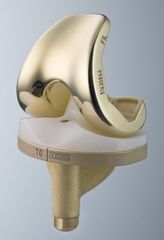
A total knee replacement does not remove the entire knee. The damaged joint surfaces are carefully resurfaced and covered with precisely sized components designed to restore alignment, stability and smooth motion.

1

Remove Damaged Surfaces

Thin portions of damaged bone and cartilage are removed from the end of the femur and top of the tibia.

2

Restore Alignment

Bone cuts, component rotation and soft-tissue balance are planned to match the knee’s anatomy and correct deformity.

3

Place the Components

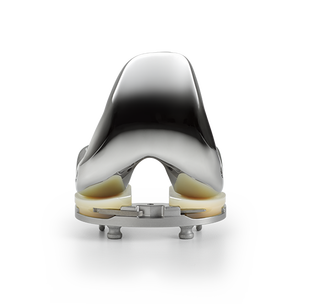
Metal components cover the femur and tibia, with a highly engineered polyethylene insert between them.

4

Balance and Test the Knee

The knee is taken through motion to assess stability, tracking, alignment and implant fit before closure.

Pioneers in Same-Day Joint Replacement

Same-Day Outpatient Knee Replacement in Atlanta

Atlanta Bone & Joint is a high-volume orthopedic group performing nearly 1,000 hip, knee and shoulder replacements each year. Our surgeons helped establish and expand same-day joint-replacement pathways at multiple surgery centers and hospitals across metro Atlanta. For properly selected patients, the plan is to walk soon after surgery, meet safety milestones and recover at home that evening.

Our outpatient goal

Walk, recover and go home the same day.

Same-day discharge is not simply leaving early. It requires preoperative preparation, efficient surgery, coordinated anesthesia, early mobility, reliable pain and nausea control, family support and clear communication after discharge.

Not every patient should have outpatient surgery. Medical history, mobility, home support and progress after the operation determine whether same-day discharge is safe.

Explore Outpatient Joint Replacement
HV
High-volume surgeonsOur surgeons routinely perform multiple joint replacements in a surgical day and are comfortable with both straightforward and complex reconstruction.
OR
The same team and the same workflowConsistent staff, equipment, room setup and operative steps allow everyone to anticipate what comes next.
TIME
Efficient surgical timeEfficiency is not rushing. It is the result of repetition, preparation and a team that knows the operation exceptionally well.
SAFE
Hospital care remains availablePatients who need additional observation or medical support are treated in the setting that best matches their safety needs.
A Personalized Surgical Plan

Choosing the Right Knee Replacement Implant and Surgical Plan

A successful operation requires decisions about alignment, fixation, component size, ligament balance, kneecap tracking, anesthesia, pain control, closure and recovery setting. Technology can assist the plan, but high-volume experience and reliable surgical execution remain central.

Cemented or Cementless

Fixation is selected according to age, bone quality, anatomy, activity and the implant system being used.

Implant Materials

Standard and alternative bearing or metal-sensitivity options may be discussed when clinically appropriate.

Metal sensitivity information →

Robotics and AI Planning

Advanced planning or robotic tools may be used when they meaningfully support positioning and personalization.

Explore robotic knee replacement →

Primary and Revision Skill

Surgeons experienced in complex reconstruction can plan primary surgery with a clear understanding of bone loss, instability and revision principles.

High-Volume Details That Matter

Spinal Anesthesia, Long-Acting Pain Control and Buried-Stitch Closure

High-volume joint replacement is not speed for its own sake. Our surgeons work with experienced teams that repeat the same standardized setup and workflow throughout the day. Everyone knows the sequence, instruments and recovery pathway, allowing the operation to move efficiently while preserving careful technique.

01

Spinal-First Anesthesia

When medically appropriate, the lower body is numbed and comfortable sedation can be provided. This often avoids a traditional full general anesthetic, although the final plan is individualized by the anesthesia team.

02

Long-Acting Multimodal Pain Control

We may use long-acting local anesthetics such as EXPAREL (liposomal bupivacaine), together with other medications and regional techniques, to extend early pain relief when appropriate.

03

Buried Absorbable Stitches

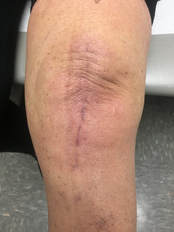
Plastic-surgery-style closure with buried absorbable sutures and skin adhesive is typically used instead of external staples, so there is usually no painful staple-removal visit.

04

Same-Day Home Recovery

Appropriate patients begin walking shortly after surgery and go home after mobility, pain, nausea and medical-safety milestones are met.

05

Your Attending Surgeon Performs the Operation

The surgeon responsible for your plan is directly involved in the procedure and in postoperative decision-making.

06

Primary and Revision Expertise

Our high-volume surgeons also evaluate painful and failed knee replacements, bringing complex-reconstruction experience to primary knee replacement surgery.

Important: no anesthesia technique, medication, scar appearance or same-day discharge can be guaranteed. The plan may change according to your health, response to treatment and safety on the day of surgery.
Outpatient Joint Replacement Knee Recovery Guide
Total or Partial?

Total vs. Partial Knee Replacement

The location of cartilage loss is critical. A partial knee replacement may be considered when disease is truly isolated to one compartment and the remaining knee structures are appropriate. A total knee replacement is generally more suitable when arthritis affects multiple compartments or deformity and stiffness are more advanced.

Most Common

Total Knee Replacement

Resurfaces all major compartments of the knee and is used for widespread arthritis, significant deformity or disease involving more than one portion of the joint.

  • More broadly applicable
  • Corrects more advanced deformity
  • Highly established long-term track record
Selected Patients

Partial Knee Replacement

Resurfaces only the diseased compartment while preserving more natural bone, ligaments and cartilage elsewhere in the knee.

  • Requires truly isolated arthritis
  • Patient selection is essential
  • May offer a more natural-feeling knee in the right candidate
Learn about partial knee replacement →
Recovery Expectations

Total Knee Replacement Recovery: What to Expect

Recovery begins immediately, but a knee replacement is not a one-week recovery. Swelling, stiffness, sleep disruption and fluctuating soreness are common early. Consistent movement, therapy and realistic expectations are central to progress.

Surgery Day

Stand and Begin Walking

Most patients begin walking with assistance shortly after surgery. For medically appropriate patients, our expected outpatient pathway is to meet safety milestones and return home that same day.

Weeks 1–2

Control Swelling and Restore Motion

Early priorities include medication management, icing, elevation, safe walking, wound care and regular range-of-motion work.

Weeks 3–8

Build Strength and Endurance

Walking tolerance, stairs, balance and functional strength typically improve as swelling and pain gradually decrease.

Months 3–12

Continue Long-Term Improvement

Strength, confidence, swelling and the overall feel of the knee can continue to improve for many months after surgery.

Every recovery is different. Your timeline may change based on preoperative motion, muscle strength, medical conditions, the condition of the opposite leg, previous surgery and your specific procedure.
Questions Patients Should Ask

How to Choose an Atlanta Knee Replacement Surgeon

A high-quality consultation should give you clear answers to the questions that affect your operation and recovery.

?

Can I go home the same day?

Ask whether the program routinely performs outpatient knee replacement and how health, mobility and home support affect candidacy.

?

How high-volume is the team?

Volume should include the surgeon, operating-room team, anesthesia pathway and postoperative workflow—not just a number on a website.

?

Spinal or general anesthesia?

Discuss whether spinal anesthesia with sedation can avoid a traditional full general anesthetic and support the planned recovery pathway.

?

What is the pain-control plan?

Ask about regional anesthesia, non-opioid medications, long-acting local anesthetics and the backup plan for breakthrough pain.

?

How is the incision closed?

Ask whether buried absorbable sutures and skin adhesive are used and whether external staples will need to be removed.

?

Which implant and fixation?

Ask how bone quality, allergy concerns, age and anatomy influence implant materials and cemented versus cementless fixation.

Total Knee Replacement FAQs

Atlanta Knee Replacement FAQs

How do I know whether I am ready for total knee replacement?
Readiness is based on more than the appearance of an X-ray. Knee replacement is generally considered when arthritis causes substantial pain or loss of function and reasonable nonsurgical treatment no longer provides acceptable relief. Your medical fitness, expectations and willingness to participate in recovery also matter.
Does “bone-on-bone” arthritis always require surgery?
No. Some people with severe radiographic arthritis remain functional with nonsurgical care, while others have major disability. The decision depends on your symptoms, motion, stability, deformity, health and goals—not the X-ray alone.
Can a total knee replacement be performed as outpatient surgery?
Yes, many medically appropriate patients can go home the day of surgery after they are walking safely, pain and nausea are controlled and discharge criteria are met. Patients with significant medical conditions or limited support may be safer with hospital observation.
Will I have to “go under” with general anesthesia?
Not necessarily. When medically appropriate, our preferred pathway commonly uses spinal anesthesia to numb the lower body. Sedation can be given so you are relaxed or asleep and may remember little or none of the operation. Some patients still need or prefer general anesthesia, and the final plan is made with the anesthesia team.
Do you use EXPAREL or other long-acting pain medication?
When appropriate, long-acting local anesthetics such as EXPAREL (liposomal bupivacaine) may be included in a multimodal pain-control plan. It is one part of the plan, not a guarantee of a pain-free recovery, and individual response varies.
Will my knee incision be closed with staples?
Routine primary knee replacements are typically closed with buried absorbable sutures beneath the skin and skin adhesive rather than external staples. This usually eliminates a painful staple-removal visit. The goal is a neat scar, but final scar appearance varies with skin type, healing and individual biology.
How long does a modern knee replacement last?
Many well-functioning knee replacements last for decades. Longevity varies with implant position, fixation, activity, weight, bone quality, infection risk and other patient-specific factors. No implant can be guaranteed to last for a particular number of years.
Will my knee feel completely normal after replacement?
The goal is major improvement in arthritis pain and function, but an artificial knee does not always feel identical to a natural knee. Some patients continue to notice kneeling sensitivity, clicking, stiffness or awareness of the implant even when the replacement is functioning well.
Do I need a robotic knee replacement?
Robotics and AI-assisted planning are tools that can help selected surgeons plan or execute component positioning. They do not replace surgical judgment, soft-tissue balancing or experience. The best approach is the one your surgeon can use reliably for your anatomy and goals.
What if I already have a painful knee replacement?
Persistent pain should be evaluated systematically. Possible causes include infection, stiffness, instability, loosening, implant position, kneecap problems, referred pain or other conditions. Revision surgery is only recommended when a correctable cause is identified.
Continue Your Research

Related Knee Replacement Resources

Knee Replacement Second OpinionReview the diagnosis, procedure, implant plan and alternatives. Knee Replacement RecoveryLearn what to expect before and after surgery. Painful Knee ReplacementEvaluation of stiffness, infection, loosening and instability. Partial Knee ReplacementSee when a one-compartment replacement may be appropriate. Outpatient Joint ReplacementSame-day discharge pathways for selected patients. Robotic Knee ReplacementHow robotics and AI-assisted planning may be used. Preparing for Knee SurgeryPractical steps before your procedure. Revision Knee ReplacementComplex reconstruction when a replacement has failed. Atlanta Knee Replacement SurgeonsMeet the orthopedic surgeons behind our high-volume joint replacement program.
Convenient Metro Atlanta Access

Atlanta Knee Replacement Consultations in Decatur, Snellville and Loganville

Atlanta Bone & Joint Specialists evaluates patients from Atlanta and communities throughout DeKalb, Gwinnett, Walton, Fulton, Rockdale, Newton and surrounding counties.

Decatur

2801 North Decatur Road
Suite 200
Decatur, GA 30033

404-296-5005 Decatur office information →

Snellville

2400 Wisteria Drive
Suite A
Snellville, GA 30078

770-985-9330 Snellville office information →

Loganville

4743 Atlanta Highway
Suite 100
Loganville, GA 30052

770-564-3393 Loganville office information →
Take the Next Step

Schedule With a High-Volume Atlanta Knee Replacement Team

Bring your X-rays, prior treatment history and questions. We will evaluate the entire knee, explain whether total or partial replacement is appropriate and discuss outpatient candidacy, anesthesia, pain control, implant selection, closure and recovery.

Schedule an Appointment Online Call 404-298-3730 Request a Second Opinion
This page is provided for general educational purposes and does not constitute medical advice, diagnosis or a physician-patient relationship. Treatment recommendations, surgical candidacy, implant selection and recovery expectations depend on an individual medical history, physical examination and review of appropriate imaging. Seek urgent medical care for severe or rapidly worsening symptoms.

​Call to Schedule Your Appointment Today
SE HABLA ESPAÑOL!

Office Hours / Horario
Monday–Friday: 9:00 AM–5:00 PM
Lunes–Viernes: 9:00 AM–5:00 PM
Saturday Football Clinic
Saturdays during high school football season
Sábados durante la temporada de fútbol americano escolar
Injured Players Only / Solo jugadores lesionados
Media Room
News, videos, interviews and practice updates.
Visit the Media Room
Decatur: 404-296-5005 Snellville: 770-985-9330 Loganville: 770-564-3393
© Atlanta Bone & Joint Specialists
Second Opinions Media Room
```
  • Our Doctors
    • About Us
    • Maurice Jové, M.D.
    • Nathan Jove, M.D. >
      • Español
    • Jeff Traub, M.D.
    • Brandon Tolman, D.O.
    • Physician Assistants >
      • Omid Midanaky, PA-C
      • Aidan O'Connor, MPH, PA-C
      • Elissa Stanton, PA-C
  • Locations
    • Decatur
    • Loganville
    • Snellville
  • Appointments
    • Online Scheduling
    • Citas Ortopédicas (ES)
    • Second Opinion >
      • Elite Athlete Second Opinions
      • Second Opinion
    • Self-Pay MRI
    • Medical Tourism
  • Patient Resources
    • Español >
      • Atención Ortopédica Urgente en Español
      • Radiografías el Mismo Día para Lesiones
      • Inyecciones de Cortisona el Mismo Día
    • Urgent Orthopaedic Care >
      • Urgent Orthopaedic Care
      • Same-Day Sports Injury Care
      • Joint Dislocation Treatment & Reduction
      • Swollen Knee Treatment & Joint Aspiration
      • Same-Day Cortisone Shots and Joint Injections
    • Social Media >
      • Facebook
      • Instagram
      • LinkedIN
      • Twitter
      • YouTube
      • Nathan Jove Social Media >
        • @theorthopedicsurgeon on Instagram
        • @theorthopedicsurgeon on Youtube
    • Billing & Insurance >
      • Payments
      • Cost Estimator
      • Insurance
    • Patient Forms & Requests >
      • Forms
      • Medical Records
      • Prescription Refill Request >
        • Decatur
        • Loganville
    • Bracing
    • Conditions Treated >
      • Arthritis
      • Avascular Necrosis
      • Sports Injuries
    • MRI
    • MRI Review
    • Reviews
    • Affiliate Hospital Resources >
      • Emory Decatur Hospital
      • Atlanta Outpatient Surgery Center
    • Saturday Clinic
    • What To Expect
    • Blog
    • FAQ >
      • Blood Clots After Orthopedic Surgery
      • FAQ
      • Video
      • What is an Orthopedic Doctor
      • Home Therapy
    • Orthopedic Survey Center >
      • Outpatient Total Joint Replacement Survey
      • Painful Knee Replacement Survey
      • Painful Hip Replacement Survey
      • Rotator Cuff Surgery Survey
      • Meniscus Tear Survey
      • Partial Knee Replacement Survey
      • Self-Pay MRI Request Form
      • Elite Athlete Second Opinion Survey
      • Orthopedic Second Opinions & MRI Review | Dr. Nathan Jové
    • Privacy Policy
  • Specialties
    • Joint Replacement Center >
      • Hip >
        • Hip Replacement Second Opinion
        • Anterior Hip Replacement
        • Total Hip Replacement
        • Painful Hip Replacement
      • Knee >
        • Knee Replacement Second Opinion
        • Total Knee Replacement
        • Knee Replacement Surgery Recovery
        • Painful Knee Replacement
        • Anterior Reference Knee Replacement
        • Partial Knee Replacement
        • Patellofemoral Replacement
        • Tourniquet-less Knee Replacement
        • How to Prepare and What to Expect Knee Surgery
      • Shoulder >
        • Shoulder Replacement Second Opinion
        • Total Shoulder Replacement
        • Reverse Total Shoulder Replacement
        • Shoulder Surgery
      • Ankle >
        • Total Ankle Replacement
      • Outpatient Joint Replacement Center
      • Revision Surgery >
        • Revision Knee Replacement
        • Revision Hip Replacement Surgery
        • Metal on Metal Hip Problems
      • Metal Sensitivity and Nickel Allergy
      • Infections >
        • Hip and Knee Replacement Infections
    • Knee >
      • Knee Surgery
      • Knee Arthritis
      • Cartilage Repair & Restoration
      • Meniscus Tears
      • ACL Tears
      • MACI Cartilage Repair
      • Patella (Kneecap) Instability
      • MPFL Tear & Patellar Instability
      • Patella (Kneecap) Dislocation
      • Knee MCL Injuries
      • Knee AVN
      • Quadriceps Tendon Tear
      • Patellar Tendon Tear
    • Shoulder >
      • Shoulder Surgery
      • Rotator Cuff Tears
      • SLAP Tears
      • Labral Tears
      • Shoulder Arthritis
      • Shoulder Dislocation/s
      • Shoulder AVN
    • Hip >
      • Hip Surgery
      • Hip Arthritis
      • Hip AVN
      • Hip Labral Tears
      • Femoroacetabular Impingement
      • Gluteus Medius & Minimus Tears
      • Greater Trochanteric Bursitis
    • Foot and Ankle >
      • Achilles Tendon Tears
      • Ankle Sprains and Recurrent Instability
      • Syndesmosis (High Ankle) Sprain
      • Ankle Arthritis
      • Ankle (Talus) AVN
      • Kohler's Disease- Navicular AVN
      • Tarsal Tunnel Release
    • Elbow, Hand & Wrist >
      • Carpal Tunnel Sydnrome
      • Cubittal Tunnel Syndrome
      • Elbow UCL Injuries
      • Trigger Finger
      • Tennis Elbow (Lateral Epicondylitis)
      • Biceps Tears
    • Robotic Surgery >
      • Robotic Knee Replacement with AI
      • Robotic Hip Replacement with AI
    • Arthroscopic Surgery
    • Regenerative Medicine >
      • Stem Cell Therapy
      • Cartilage Restoration
      • PRP (Platelet-Rich Plasma) Injections
      • Hyaluronic Gel Injections - Atlanta Bone and Joint Specialists
    • Fracture Care >
      • Fracture Care
      • Shoulder >
        • Collarbone (Clavicle) Fracture
        • Proximal Humerus Fractures
      • Upper Arm (Humerus) >
        • Humerus Shaft Fractures
      • Elbow >
        • Radial Head Fractures
        • Olecranon (Elbow) Fractures
      • Forearm >
        • Radius Fractures
        • Ulna Fractures
        • Both Bone Forearm Fractures
      • Hand & Wrist >
        • Broken Wrist/Distal Radius Fracture
        • Metacarpal Fractures
        • Finger Fractures
      • Hip & Femur >
        • Hip Fractures
        • Femoral Shaft Fractures
      • Knee >
        • Patella (Kneecap) Fractures
        • Tibial Plateau Fractures
        • Distal Femur Fractures
      • Tibia (Shinbone) >
        • Tibia & Shinbone Fractures
      • Foot & Ankle >
        • Ankle Fractures
        • Calcaneus Fractures
        • Jones Fractures
      • Fracture Nonunion & Malunion
      • Periprosthetic Fractures
    • EMG
    • Español >
      • Manguito Rotador
      • Reemplazo de Rodilla
      • Reemplazo de Cadera
      • Reemplazo de Hombro
      • Lesiones por Accidentes
      • Dislocación e Inestabilidad del Hombro
      • Desgarro de Menisco
      • Fracturas y Huesos Rotos
      • Dedo en Gatillo
  • Workers Compensation
    • Submit a Referral
    • Injuries We Treat
    • Adjusters & Case Managers
    • Direct Physician Contacts
    • Workers Compensation Overview
    • Care & Documentation
    • Neck & Back Injuries
    • Shoulder & Knee Injuries
    • Compensación Laboral
  • For Professionals
    • Physician Referrals
    • Attorney Referrals
    • Orthopedic Expert Witness
    • Independent Medical Examination
    • Car Accident Orthopedic Care
    • Job Opportunities