Atlanta Bone and Joint Specialists
  • Our Doctors
    • About Us
    • Maurice Jové, M.D.
    • Nathan Jové, M.D. >
      • Español
    • Jeff Traub, M.D.
    • Brandon Tolman, D.O.
    • Physician Assistants >
      • Omid Midanaky, PA-C
      • Aidan O'Connor, MPH, PA-C
      • Elissa Stanton, PA-C
  • Locations
    • Decatur
    • Loganville
    • Snellville
  • Appointments
    • Online Scheduling
    • Citas Ortopédicas (ES)
    • Second Opinion >
      • Elite Athlete Second Opinions
      • Second Opinion
    • Self-Pay MRI
    • Medical Tourism
  • Patient Resources
    • Español >
      • Atención Ortopédica Urgente en Español
      • Radiografías el Mismo Día para Lesiones
      • Inyecciones de Cortisona el Mismo Día
    • Urgent Orthopaedic Care >
      • Urgent Orthopaedic Care
      • Same-Day Sports Injury Care
      • Joint Dislocation Treatment & Reduction
      • Swollen Knee Treatment & Joint Aspiration
      • Same-Day Cortisone Shots and Joint Injections
    • Social Media >
      • Facebook
      • Instagram
      • LinkedIN
      • Twitter
      • YouTube
      • Nathan Jove Social Media >
        • @theorthopedicsurgeon on Instagram
        • @theorthopedicsurgeon on Youtube
    • Billing & Insurance >
      • Payments
      • Cost Estimator
      • Insurance
    • Patient Forms & Requests >
      • Forms
      • Medical Records
      • Prescription Refill Request >
        • Decatur
        • Loganville
    • Bracing
    • Conditions Treated >
      • Arthritis
      • Avascular Necrosis
      • Sports Injuries
    • MRI
    • MRI Review
    • Reviews
    • Affiliate Hospital Resources >
      • Emory Decatur Hospital
      • Atlanta Outpatient Surgery Center
    • Saturday Clinic
    • What To Expect
    • Blog
    • FAQ >
      • Blood Clots After Orthopedic Surgery
      • FAQ
      • Video
      • What is an Orthopedic Doctor
      • Home Therapy
    • Orthopedic Survey Center >
      • Outpatient Total Joint Replacement Survey
      • Painful Knee Replacement Survey
      • Painful Hip Replacement Survey
      • Rotator Cuff Surgery Survey
      • Meniscus Tear Survey
      • Partial Knee Replacement Survey
      • Self-Pay MRI Request Form
      • Elite Athlete Second Opinion Survey
      • Orthopedic Second Opinions & MRI Review | Dr. Nathan Jové
    • Privacy Policy
  • Specialties
    • Joint Replacement Center >
      • Hip >
        • Hip Replacement Second Opinion
        • Anterior Hip Replacement
        • Total Hip Replacement
        • Painful Hip Replacement
      • Knee >
        • Knee Replacement Second Opinion
        • Total Knee Replacement
        • Knee Replacement Surgery Recovery
        • Painful Knee Replacement
        • Anterior Reference Knee Replacement
        • Partial Knee Replacement
        • Patellofemoral Replacement
        • Tourniquet-less Knee Replacement
        • How to Prepare and What to Expect Knee Surgery
      • Shoulder >
        • Shoulder Replacement Second Opinion
        • Total Shoulder Replacement
        • Reverse Total Shoulder Replacement
        • Shoulder Surgery
      • Ankle >
        • Total Ankle Replacement
      • Outpatient Joint Replacement Center
      • Revision Surgery >
        • Revision Knee Replacement
        • Revision Hip Replacement Surgery
        • Metal on Metal Hip Problems
      • Metal Sensitivity and Nickel Allergy
      • Infections >
        • Hip and Knee Replacement Infections
    • Knee >
      • Knee Surgery
      • Knee Arthritis
      • Cartilage Repair & Restoration
      • Meniscus Tears
      • ACL Tears
      • MACI Cartilage Repair
      • Patella (Kneecap) Instability
      • MPFL Tear & Patellar Instability
      • Patella (Kneecap) Dislocation
      • Knee MCL Injuries
      • Knee AVN
      • Quadriceps Tendon Tear
      • Patellar Tendon Tear
    • Shoulder >
      • Shoulder Surgery
      • Rotator Cuff Tears
      • SLAP Tears
      • Labral Tears
      • Shoulder Arthritis
      • Shoulder Dislocation/s
      • Shoulder AVN
    • Hip >
      • Hip Surgery
      • Hip Arthritis
      • Hip AVN
      • Hip Labral Tears
      • Femoroacetabular Impingement
      • Gluteus Medius & Minimus Tears
      • Greater Trochanteric Bursitis
    • Foot and Ankle >
      • Achilles Tendon Tears
      • Ankle Sprains and Recurrent Instability
      • Syndesmosis (High Ankle) Sprain
      • Ankle Arthritis
      • Ankle (Talus) AVN
      • Kohler's Disease- Navicular AVN
      • Tarsal Tunnel Release
    • Elbow, Hand & Wrist >
      • Carpal Tunnel Sydnrome
      • Cubittal Tunnel Syndrome
      • Elbow UCL Injuries
      • Trigger Finger
      • Tennis Elbow (Lateral Epicondylitis)
      • Biceps Tears
    • Robotic Surgery >
      • Robotic Knee Replacement with AI
      • Robotic Hip Replacement with AI
    • Arthroscopic Surgery
    • Regenerative Medicine >
      • Overview
      • Stem Cell Therapy & BMAC
      • Cartilage Restoration
      • PRP (Platelet-Rich Plasma) Injections
      • Hyaluronic Gel Injections - Atlanta Bone and Joint Specialists
      • Amniotic Tissue
      • Peptides & BPC-157: Evidence Review
    • Fracture Care >
      • Fracture Care
      • Shoulder >
        • Collarbone (Clavicle) Fracture
        • Proximal Humerus Fractures
      • Upper Arm (Humerus) >
        • Humerus Shaft Fractures
      • Elbow >
        • Radial Head Fractures
        • Olecranon (Elbow) Fractures
      • Forearm >
        • Radius Fractures
        • Ulna Fractures
        • Both Bone Forearm Fractures
      • Hand & Wrist >
        • Broken Wrist/Distal Radius Fracture
        • Metacarpal Fractures
        • Finger Fractures
      • Hip & Femur >
        • Hip Fractures
        • Femoral Shaft Fractures
      • Knee >
        • Patella (Kneecap) Fractures
        • Tibial Plateau Fractures
        • Distal Femur Fractures
      • Tibia (Shinbone) >
        • Tibia & Shinbone Fractures
      • Foot & Ankle >
        • Ankle Fractures
        • Calcaneus Fractures
        • Jones Fractures
      • Fracture Nonunion & Malunion
      • Periprosthetic Fractures
    • Ultrasound & Guided Injections
    • EMG
    • Español >
      • Manguito Rotador
      • Reemplazo de Rodilla
      • Reemplazo de Cadera
      • Reemplazo de Hombro
      • Lesiones por Accidentes
      • Dislocación e Inestabilidad del Hombro
      • Desgarro de Menisco
      • Fracturas y Huesos Rotos
      • Dedo en Gatillo
  • Workers Compensation
    • Submit a Referral
    • Injuries We Treat
    • Adjusters & Case Managers
    • Direct Physician Contacts
    • Workers Compensation Overview
    • Care & Documentation
    • Neck & Back Injuries
    • Shoulder & Knee Injuries
    • Compensación Laboral
  • For Professionals
    • Physician Referrals
    • Attorney Referrals
    • Orthopedic Expert Witness
    • Independent Medical Examination
    • Car Accident Orthopedic Care
    • Job Opportunities
Medial Partial Knee Replacement Candidate Survey

Medial Partial Knee Replacement in Atlanta

Pain on the inside of the knee, sharp inner-joint pain, or “bone-on-bone” arthritis on one side may raise the question of a medial partial knee replacement. The operation can preserve healthy portions of the knee and its major ligaments—but only when the arthritis is truly isolated. Our surgeons use strict screening, personally examine the MRI, and do not recommend a partial replacement simply because it sounds like the smaller operation.

This page and survey evaluate medial compartment partial knee replacement only—not lateral or patellofemoral replacement.
Check My Partial Knee Candidacy Schedule a Knee Evaluation 404-298-3730
Inside Knee Pain Candidacy Criteria Partial vs. Total Recovery & Activity Second Opinion
Symptoms and Location

Pain on the Inside of the Knee: Could It Be Medial Compartment Arthritis?

Patients often recognize the location before they know the diagnosis. The following descriptions can occur with medial-compartment arthritis, but an examination and imaging are needed because meniscus problems, ligament irritation, hip disease, and other conditions can cause similar pain.

Pain Inside the Knee When Walking

Weight-bearing pain along the inner joint line may become more noticeable with longer walks, stairs, standing, or uneven ground.

Sharp Inner-Joint Pain

Some patients describe a focused, sharp pain on the inside of the joint rather than pain throughout the entire knee.

“Bone-on-Bone” Inner Knee

Standing X-rays may show advanced medial cartilage loss, narrowing, or bone-on-bone contact while other areas appear better preserved.

Arthritis on Only One Side

A partial replacement is considered only when symptoms, examination, X-rays, and MRI all support truly isolated medial disease.

Important: pain being worst on the inside does not prove that arthritis exists only on the inside. That distinction is the foundation of a safe partial-knee decision.
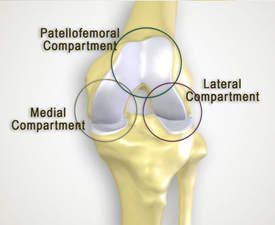
One Knee, Three Compartments

What Does “Partial” Knee Replacement Mean?

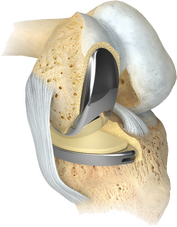
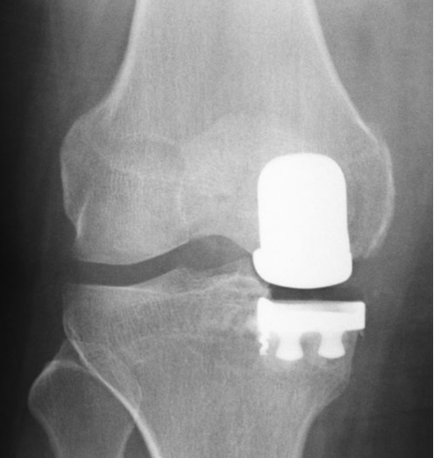
The knee has three major compartments. A partial, or unicompartmental, knee replacement resurfaces only the diseased compartment while preserving the other compartments and the major stabilizing ligaments.

Focus of This Page

Medial Compartment

The inside portion of the knee. This is the most common location for isolated arthritis and the only type of partial knee replacement evaluated by this page and survey.

Different Procedure

Lateral Compartment

The outside portion of the knee. Lateral unicompartmental replacement exists, but it has different indications and is not the focus of this screening page.

Different Procedure

Patellofemoral Compartment

The joint behind the kneecap. Patellofemoral replacement is a separate operation with its own selection criteria and evaluation.

Strict Eligibility Screening

Am I a Candidate for Partial Knee Replacement?

We are intentionally selective. A partial knee replacement can be an excellent operation in the right patient, but a poor choice when arthritis, alignment problems, ligament damage, or bone-quality concerns extend beyond the medial compartment.

Isolated Medial Arthritis

Advanced cartilage loss must be confined to the inside compartment, without meaningful arthritis in the lateral or kneecap compartments.

Usually Younger Than 60

Our practice generally reserves this operation for carefully selected, active patients under age 60 rather than applying it broadly.

BMI Under 30

We use a BMI below 30 as a practical screening parameter when considering medial partial knee replacement.

Good Overall Health

The patient should be medically healthy enough for elective joint replacement and committed to rehabilitation and long-term implant protection.

Good Bone Quality

Strong supporting bone matters because a partial replacement relies on a smaller area of bone for stable implant fixation.

Stable Ligaments and Correctable Alignment

The major knee ligaments should be functional, the deformity should be correctable, and the knee should straighten appropriately.

These are Atlanta Bone & Joint Specialists’ screening preferences—not universal rules and not a diagnosis. Final candidacy requires an in-person examination and surgeon review of weight-bearing X-rays and the actual MRI images.

Do You Fit Our Medial Partial Knee Replacement Criteria?

The survey gives our team a focused starting point. It does not replace an examination, X-rays, or MRI review, but it helps us understand whether a partial-knee evaluation may be appropriate.

Check My Eligibility With the Survey
The MRI Matters

We Examine All Three Compartments Before Recommending Surgery

A standing X-ray may show that the medial side is the worst part of the knee, but “worst” is not the same as “isolated.” In our practice, the surgeon personally reviews the MRI—not only the written report—and combines it with weight-bearing X-rays and the physical examination. We assess cartilage, menisci, ligament integrity, bone changes, and the lateral and patellofemoral compartments before deciding between a medial partial and a total knee replacement.

  • Medial cartilage and bone loss must match the patient’s pain and examination.
  • The lateral compartment should remain genuinely preserved.
  • The patellofemoral joint must be assessed for meaningful arthritis.
  • The ACL, PCL, menisci, alignment, motion, and bone quality all influence the decision.
Why We Are Conservative

A Smaller Operation Is Not Automatically the Better Operation

A properly selected medial partial knee replacement may offer a smaller reconstruction, faster early recovery, preservation of healthy ligaments, and a knee that can feel more natural. However, it leaves the lateral and patellofemoral compartments untreated.

When arthritis already exists in those untreated areas, patients may have persistent pain or develop progression that leads to early conversion to a total knee replacement. That is why our threshold is high and why we would rather recommend the correct operation once than perform the smaller operation on the wrong knee.

Revision Experience Changes the Perspective

Revision Experience Makes Us More Selective About Partial Knees

As a high-volume revision knee replacement practice, our surgeons evaluate patients with painful or failed partial replacements, including knees with arthritis in untreated compartments. Large studies generally report a higher revision rate after unicompartmental replacement than after total knee replacement. That does not make every partial knee a poor operation—it makes accurate selection especially important.

1

Confirm the Diagnosis

We make sure the pain is truly generated by isolated medial compartment arthritis rather than the kneecap, lateral compartment, hip, back, or another source.

2

Protect Against Early Failure

We look carefully for pre-existing disease outside the medial compartment that could create persistent symptoms or accelerate conversion to total knee replacement.

3

Choose the Right Reconstruction

When the knee does not meet strict partial-replacement criteria, a total knee replacement may provide a more reliable and durable solution.

Choosing the Correct Reconstruction

Partial Knee Replacement vs. Total Knee Replacement

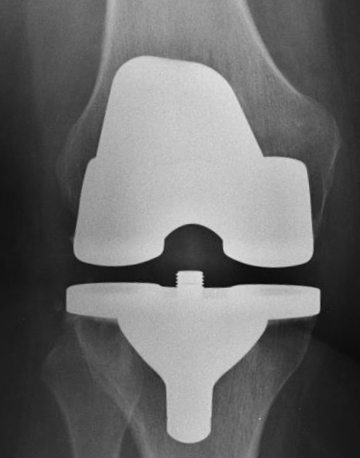
Why choose a partial knee instead of a total knee? A partial may preserve more native bone, healthy cartilage, and major ligaments, with a faster early recovery in the right patient. A total knee is generally more appropriate when arthritis is not truly isolated. The decision is based on the whole knee—not incision size alone.

Factor
Medial Partial Knee
Total Knee Replacement
Arthritis pattern
Truly isolated to the medial compartment
May involve two or all three compartments
Tissue preserved
Preserves healthy compartments and major ligaments
Resurfaces the entire knee joint
Early recovery
Often somewhat faster in an appropriate candidate
Usually requires more early rehabilitation
Future revision
May require conversion if arthritis progresses elsewhere
Generally offers more predictable long-term coverage of multicompartment disease
Ligaments
Typically preserves the ACL and PCL when they are functional
Implant design and surgeon technique determine which ligaments are retained or substituted
Best fit
Narrow group with isolated medial disease and favorable anatomy
Broader group with advanced arthritis affecting more of the knee
Recovery and Lifestyle

Partial Knee Replacement Recovery, Walking, Sports, and Scar

Patients often consider a unicompartmental replacement because they hope for a faster recovery and a more natural-feeling knee. Those are reasonable goals in a properly selected patient, but recovery varies and the operation is still a joint replacement.

Walking After Surgery

Most appropriately selected patients begin standing and walking with assistance on the day of surgery. Progression depends on strength, balance, pain control, and surgeon guidance.

Outpatient Partial Knee Replacement

For medically appropriate patients with adequate support, partial knee replacement may be performed through an outpatient pathway with discharge home the same day.

A More Natural Feel

Preserving healthy compartments and functional cruciate ligaments may produce more natural knee mechanics for some patients, but no implant can be guaranteed to feel completely normal.

Scar and Incision

The incision is often shorter than for a total knee replacement, but scar length and appearance vary with anatomy, exposure, healing, and the surgeon’s technique.

Golf and low-impact activity: many patients work toward walking, cycling, swimming, golf, and other low-impact activities after rehabilitation. Running and repetitive high-impact activity require an individualized discussion because implant protection matters.

Already Told You Qualify for a Partial Knee?

A second review can help confirm whether the arthritis is genuinely isolated and whether a partial or total knee replacement is the more durable match for your anatomy.

Check My Partial Knee Candidacy Request a Knee Second Opinion
Specialist Review and Technology

Robotic Partial Knee Replacement and Second Opinions in Atlanta

Patients often search for a robotic partial knee replacement surgeon, but technology cannot turn a poor candidate into a good one. The diagnosis, ligament stability, alignment, bone quality, and condition of every compartment come first.

Robotics Can Assist the Plan—Not Replace Judgment

Robotic or computer-assisted systems may help selected surgeons plan and execute bone preparation and implant positioning. They do not determine whether the lateral and patellofemoral compartments are healthy enough to leave untreated.

Learn how robotic and AI-assisted knee planning may be used →

Conflicting Advice About Partial vs. Total?

That is common because candidacy is narrow and surgeons may apply different thresholds. Our second-opinion process centers on the actual MRI images, weight-bearing X-rays, examination, and long-term durability—not the appeal of a smaller procedure.

Take the Candidate Survey

Medial Partial Knee Specialist Evaluation

Look for a surgeon who evaluates all three compartments and is equally comfortable recommending a total knee when a partial would leave disease behind.

Revision Experience

Experience treating failed partial knees provides a clear view of how persistent pain, progression, loosening, or incorrect selection can lead to conversion.

Outpatient Joint Replacement Experience

Efficient teams, standardized workflows, anesthesia planning, and appropriate patient selection support a safe outpatient pathway.

Common Questions

Medial Partial Knee Replacement FAQ

Am I a candidate for partial knee replacement?
A potential candidate has symptoms and advanced arthritis truly isolated to the medial compartment, favorable alignment, functional ligaments, adequate motion, good bone quality, and appropriate overall health. Our practice also generally screens for age under 60 and BMI under 30. The survey can help organize the first step, but only an examination and review of the actual imaging can determine candidacy.
Why does this page focus only on medial partial knee replacement?
Medial arthritis affects the inside of the knee and is the most common pattern considered for unicompartmental replacement. Lateral and patellofemoral replacements exist, but they are separate procedures with different indications. This survey is intentionally limited to medial-compartment candidacy.
Can I get a partial knee instead of a total knee replacement?
Only when the untreated portions of the knee are sufficiently healthy and the anatomy is favorable. When arthritis involves the lateral or patellofemoral compartments, a total knee replacement may be the more reliable operation even if the medial side is the most painful.
What are the pros and cons of partial knee replacement?
Potential advantages include preserving healthy bone, cartilage, and major ligaments; a smaller reconstruction; faster early recovery; and a more natural feel for some patients. The principal tradeoff is that untreated compartments remain and can become painful or arthritic. Published studies generally show a higher revision rate for partial than for total knee replacement.
How long does a unicompartmental knee replacement last?
There is no guaranteed lifespan. Durability depends on patient selection, implant fixation, alignment, activity, bone quality, and whether arthritis progresses elsewhere. Some partial knees function well for many years, but the possibility of earlier conversion to a total knee is part of informed decision-making.
Is a partial knee replacement safer than a total knee replacement?
A partial knee is a smaller reconstruction and may have certain early-recovery advantages in a properly selected patient, but “safer” is not universal. The wrong partial knee can lead to persistent pain or another operation. The safest choice is the operation that correctly matches the complete pattern of arthritis and the patient’s medical condition.
When can I walk after partial knee replacement?
Most appropriately selected patients begin standing and walking with assistance on the day of surgery. The use of a walker or cane and the speed of progression vary according to pain, strength, balance, swelling, and the surgeon’s rehabilitation plan.
Can I run or play golf after a partial knee replacement?
Many patients return to golf and other low-impact activities after adequate healing and rehabilitation. Running and repetitive high-impact activity are not automatically recommended and should be discussed individually because they may increase load on the implant and the remaining natural compartments.
Does a partial knee replacement feel more natural?
It may feel more natural for some patients because healthy compartments and functional cruciate ligaments are preserved. That is a potential benefit, not a guarantee; stiffness, swelling, clicking, scar sensitivity, or awareness of the implant can still occur.
What does a partial knee replacement scar look like?
The incision is often shorter than a total-knee incision, but there is no fixed scar length. The final appearance depends on the patient’s anatomy, the exposure needed, skin healing, prior scars, and individual scar formation.
Can an X-ray alone determine whether I qualify?
Not in our practice. Weight-bearing X-rays are important, but we also examine the knee and personally review the MRI to evaluate the lateral and patellofemoral compartments, ligaments, menisci, bone quality, alignment, and other possible pain sources.
Why do you use an age-under-60 and BMI-under-30 screening profile?
These are our practice’s conservative screening parameters, intended to narrow the procedure to patients we believe have the best combination of anatomy, health, bone quality, and long-term demands. They are not universal rules, and the final recommendation is individualized.
Why can a partial knee replacement fail early?
Potential causes include loosening, alignment or ligament problems, persistent pain, and progression of arthritis in the portions of the knee that were not replaced. Pre-existing disease in another compartment is an important reason to avoid a medial partial replacement.
What happens if I am not a good partial-knee candidate?
That does not automatically mean you need surgery. Depending on symptoms and imaging, options may include activity modification, medication, injections, physical therapy, bracing, osteotomy in selected younger patients, or total knee replacement when arthritis is advanced and nonsurgical treatment no longer provides acceptable relief.
Related Knee Resources

Learn More Before Your Evaluation

Partial vs. Total Knee Replacement Understand outpatient total knee replacement, implants, anesthesia, and recovery. Inside-Knee Arthritis Treatment Review nonsurgical and surgical options for medial knee arthritis. Failed Partial Knee Replacement Learn how painful or failed partial and total knee replacements are evaluated. Outpatient Partial Knee Replacement See how selected joint-replacement patients may return home the same day. Robotic Knee Replacement in Atlanta Understand the role—and limitations—of robotic and AI-assisted planning. Partial Knee Replacement Second Opinion Get another review when surgeons disagree about partial versus total replacement.

Partial Knee Replacement Evaluation in Atlanta, Decatur, Snellville and Loganville

Start with the medial partial knee replacement survey. Tell us where the knee hurts, what your imaging has shown, and whether another surgeon has recommended a partial or total replacement. The survey is a screening tool; an in-person examination and review of the actual images are required before any surgical recommendation.

Check My Partial Knee Candidacy Schedule Online 404-298-3730

Decatur

2801 North Decatur Road
Suite 200
Decatur, GA 30033

404-296-5005 Decatur office information →

Snellville

2400 Wisteria Drive
Suite A
Snellville, GA 30078

770-985-9330 Snellville office information →

Loganville

4743 Atlanta Highway
Suite 100
Loganville, GA 30052

770-564-3393 Loganville office information →
Medically reviewed by the board-certified orthopedic surgeons of Atlanta Bone & Joint Specialists. Last reviewed June 2026.
Educational content only. Survey responses cannot establish a diagnosis or guarantee candidacy for partial knee replacement.

​Call to Schedule Your Appointment Today
SE HABLA ESPAÑOL!

Office Hours / Horario
Monday–Friday: 9:00 AM–5:00 PM
Lunes–Viernes: 9:00 AM–5:00 PM
Saturday Football Clinic
Saturdays during high school football season
Sábados durante la temporada de fútbol americano escolar
Injured Players Only / Solo jugadores lesionados
Media Room
News, videos, interviews and practice updates.
Visit the Media Room
Decatur: 404-296-5005 Snellville: 770-985-9330 Loganville: 770-564-3393
© Atlanta Bone & Joint Specialists
Second Opinions Media Room
```
  • Our Doctors
    • About Us
    • Maurice Jové, M.D.
    • Nathan Jové, M.D. >
      • Español
    • Jeff Traub, M.D.
    • Brandon Tolman, D.O.
    • Physician Assistants >
      • Omid Midanaky, PA-C
      • Aidan O'Connor, MPH, PA-C
      • Elissa Stanton, PA-C
  • Locations
    • Decatur
    • Loganville
    • Snellville
  • Appointments
    • Online Scheduling
    • Citas Ortopédicas (ES)
    • Second Opinion >
      • Elite Athlete Second Opinions
      • Second Opinion
    • Self-Pay MRI
    • Medical Tourism
  • Patient Resources
    • Español >
      • Atención Ortopédica Urgente en Español
      • Radiografías el Mismo Día para Lesiones
      • Inyecciones de Cortisona el Mismo Día
    • Urgent Orthopaedic Care >
      • Urgent Orthopaedic Care
      • Same-Day Sports Injury Care
      • Joint Dislocation Treatment & Reduction
      • Swollen Knee Treatment & Joint Aspiration
      • Same-Day Cortisone Shots and Joint Injections
    • Social Media >
      • Facebook
      • Instagram
      • LinkedIN
      • Twitter
      • YouTube
      • Nathan Jove Social Media >
        • @theorthopedicsurgeon on Instagram
        • @theorthopedicsurgeon on Youtube
    • Billing & Insurance >
      • Payments
      • Cost Estimator
      • Insurance
    • Patient Forms & Requests >
      • Forms
      • Medical Records
      • Prescription Refill Request >
        • Decatur
        • Loganville
    • Bracing
    • Conditions Treated >
      • Arthritis
      • Avascular Necrosis
      • Sports Injuries
    • MRI
    • MRI Review
    • Reviews
    • Affiliate Hospital Resources >
      • Emory Decatur Hospital
      • Atlanta Outpatient Surgery Center
    • Saturday Clinic
    • What To Expect
    • Blog
    • FAQ >
      • Blood Clots After Orthopedic Surgery
      • FAQ
      • Video
      • What is an Orthopedic Doctor
      • Home Therapy
    • Orthopedic Survey Center >
      • Outpatient Total Joint Replacement Survey
      • Painful Knee Replacement Survey
      • Painful Hip Replacement Survey
      • Rotator Cuff Surgery Survey
      • Meniscus Tear Survey
      • Partial Knee Replacement Survey
      • Self-Pay MRI Request Form
      • Elite Athlete Second Opinion Survey
      • Orthopedic Second Opinions & MRI Review | Dr. Nathan Jové
    • Privacy Policy
  • Specialties
    • Joint Replacement Center >
      • Hip >
        • Hip Replacement Second Opinion
        • Anterior Hip Replacement
        • Total Hip Replacement
        • Painful Hip Replacement
      • Knee >
        • Knee Replacement Second Opinion
        • Total Knee Replacement
        • Knee Replacement Surgery Recovery
        • Painful Knee Replacement
        • Anterior Reference Knee Replacement
        • Partial Knee Replacement
        • Patellofemoral Replacement
        • Tourniquet-less Knee Replacement
        • How to Prepare and What to Expect Knee Surgery
      • Shoulder >
        • Shoulder Replacement Second Opinion
        • Total Shoulder Replacement
        • Reverse Total Shoulder Replacement
        • Shoulder Surgery
      • Ankle >
        • Total Ankle Replacement
      • Outpatient Joint Replacement Center
      • Revision Surgery >
        • Revision Knee Replacement
        • Revision Hip Replacement Surgery
        • Metal on Metal Hip Problems
      • Metal Sensitivity and Nickel Allergy
      • Infections >
        • Hip and Knee Replacement Infections
    • Knee >
      • Knee Surgery
      • Knee Arthritis
      • Cartilage Repair & Restoration
      • Meniscus Tears
      • ACL Tears
      • MACI Cartilage Repair
      • Patella (Kneecap) Instability
      • MPFL Tear & Patellar Instability
      • Patella (Kneecap) Dislocation
      • Knee MCL Injuries
      • Knee AVN
      • Quadriceps Tendon Tear
      • Patellar Tendon Tear
    • Shoulder >
      • Shoulder Surgery
      • Rotator Cuff Tears
      • SLAP Tears
      • Labral Tears
      • Shoulder Arthritis
      • Shoulder Dislocation/s
      • Shoulder AVN
    • Hip >
      • Hip Surgery
      • Hip Arthritis
      • Hip AVN
      • Hip Labral Tears
      • Femoroacetabular Impingement
      • Gluteus Medius & Minimus Tears
      • Greater Trochanteric Bursitis
    • Foot and Ankle >
      • Achilles Tendon Tears
      • Ankle Sprains and Recurrent Instability
      • Syndesmosis (High Ankle) Sprain
      • Ankle Arthritis
      • Ankle (Talus) AVN
      • Kohler's Disease- Navicular AVN
      • Tarsal Tunnel Release
    • Elbow, Hand & Wrist >
      • Carpal Tunnel Sydnrome
      • Cubittal Tunnel Syndrome
      • Elbow UCL Injuries
      • Trigger Finger
      • Tennis Elbow (Lateral Epicondylitis)
      • Biceps Tears
    • Robotic Surgery >
      • Robotic Knee Replacement with AI
      • Robotic Hip Replacement with AI
    • Arthroscopic Surgery
    • Regenerative Medicine >
      • Overview
      • Stem Cell Therapy & BMAC
      • Cartilage Restoration
      • PRP (Platelet-Rich Plasma) Injections
      • Hyaluronic Gel Injections - Atlanta Bone and Joint Specialists
      • Amniotic Tissue
      • Peptides & BPC-157: Evidence Review
    • Fracture Care >
      • Fracture Care
      • Shoulder >
        • Collarbone (Clavicle) Fracture
        • Proximal Humerus Fractures
      • Upper Arm (Humerus) >
        • Humerus Shaft Fractures
      • Elbow >
        • Radial Head Fractures
        • Olecranon (Elbow) Fractures
      • Forearm >
        • Radius Fractures
        • Ulna Fractures
        • Both Bone Forearm Fractures
      • Hand & Wrist >
        • Broken Wrist/Distal Radius Fracture
        • Metacarpal Fractures
        • Finger Fractures
      • Hip & Femur >
        • Hip Fractures
        • Femoral Shaft Fractures
      • Knee >
        • Patella (Kneecap) Fractures
        • Tibial Plateau Fractures
        • Distal Femur Fractures
      • Tibia (Shinbone) >
        • Tibia & Shinbone Fractures
      • Foot & Ankle >
        • Ankle Fractures
        • Calcaneus Fractures
        • Jones Fractures
      • Fracture Nonunion & Malunion
      • Periprosthetic Fractures
    • Ultrasound & Guided Injections
    • EMG
    • Español >
      • Manguito Rotador
      • Reemplazo de Rodilla
      • Reemplazo de Cadera
      • Reemplazo de Hombro
      • Lesiones por Accidentes
      • Dislocación e Inestabilidad del Hombro
      • Desgarro de Menisco
      • Fracturas y Huesos Rotos
      • Dedo en Gatillo
  • Workers Compensation
    • Submit a Referral
    • Injuries We Treat
    • Adjusters & Case Managers
    • Direct Physician Contacts
    • Workers Compensation Overview
    • Care & Documentation
    • Neck & Back Injuries
    • Shoulder & Knee Injuries
    • Compensación Laboral
  • For Professionals
    • Physician Referrals
    • Attorney Referrals
    • Orthopedic Expert Witness
    • Independent Medical Examination
    • Car Accident Orthopedic Care
    • Job Opportunities